
If you own or are thinking about an electric vehicle, understanding what powers its battery is crucial. EV battery electrolytes play a key role in how your car charges, drives, and lasts over time.
But what exactly are these electrolytes, and why should you care? Knowing this can help you make smarter choices about your vehicle’s performance and maintenance. Keep reading to discover how EV battery electrolytes impact your driving experience and what you need to know to get the most out of your electric ride.
Types Of Ev Battery Electrolytes
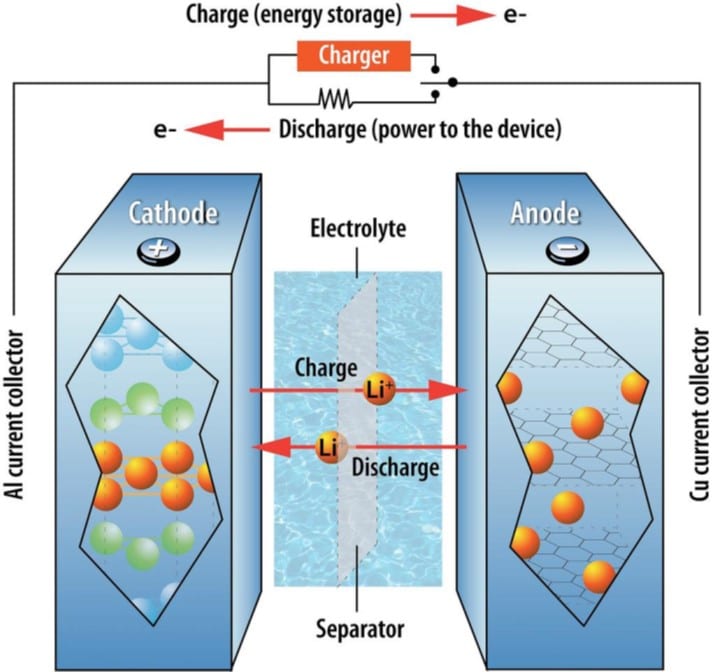
Electric vehicle (EV) batteries rely on electrolytes to move ions between the battery’s anode and cathode. This movement creates the electric current that powers the vehicle. Different types of electrolytes affect the battery’s performance, safety, and lifespan. Understanding these types helps explain how EV batteries work.
Liquid Electrolytes
Liquid electrolytes are the most common in EV batteries. They usually contain a salt dissolved in a liquid solvent. This form allows ions to move quickly, which improves battery efficiency. Liquid electrolytes are easy to produce and cost-effective. However, they can leak or catch fire if damaged.
Solid Electrolytes
Solid electrolytes are a newer technology in EV batteries. They replace liquid with a solid material that conducts ions. This makes batteries safer and more stable. Solid electrolytes reduce the risk of leaks and fires. They also help increase battery life. The main challenge is making them work well at all temperatures.
Gel Electrolytes
Gel electrolytes combine liquid and solid features. They are made by thickening liquid electrolytes with a gel-like substance. This helps prevent leaks while keeping good ion movement. Gel electrolytes improve battery safety and durability. They are a middle ground between liquid and solid types.
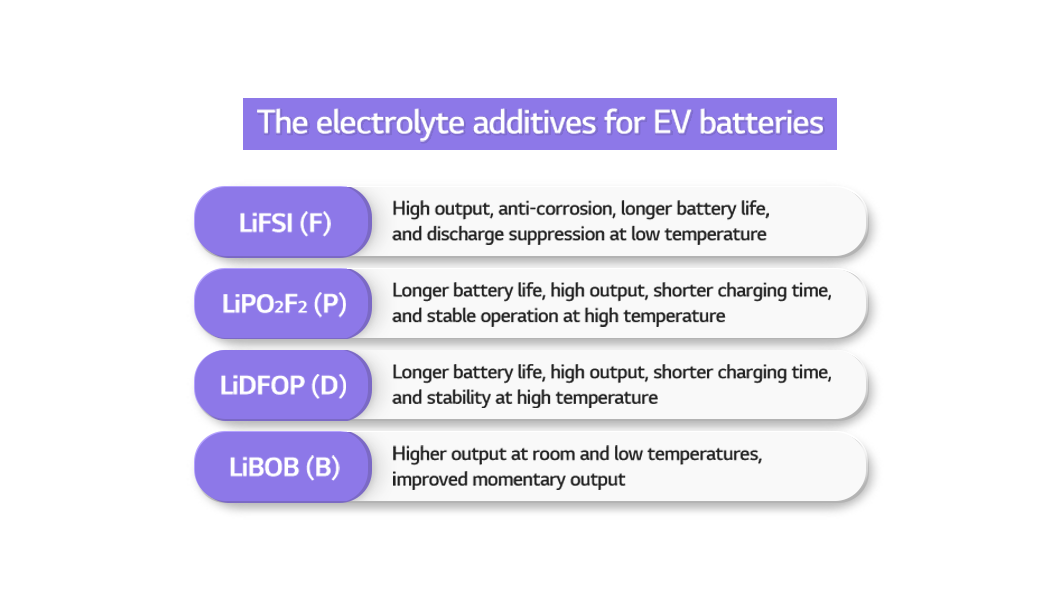
Credit: inside.lgensol.com
Key Properties Impacting Performance
Electrolytes play a vital role in the performance of EV batteries. Their properties directly affect how well a battery works. Understanding these key properties helps improve battery life and efficiency.
Each property influences different aspects of battery operation. Some impact energy flow, while others affect safety and durability. Let’s explore the main properties that matter most for EV battery electrolytes.
Ionic Conductivity
Ionic conductivity measures how easily ions move through the electrolyte. High conductivity means ions flow faster, helping the battery charge and discharge quickly. This leads to better power delivery and efficiency. Low conductivity slows down ion movement, reducing battery performance.
Thermal Stability
Thermal stability shows how well the electrolyte handles temperature changes. A stable electrolyte stays safe and effective at high and low temperatures. Good thermal stability prevents breakdown or fires during battery use. Poor stability can cause damage and reduce battery life.
Electrochemical Window
The electrochemical window defines the voltage range the electrolyte can handle without breaking down. A wide window allows the battery to work at higher voltages. This increases energy storage and battery capacity. A narrow window limits battery voltage and reduces performance.
Innovations In Electrolyte Materials
Electrolytes play a key role in electric vehicle (EV) batteries. Innovations in electrolyte materials improve battery life, safety, and performance. New materials help solve problems like overheating and limited range. These advances support the growing demand for better EVs.
Advanced Lithium Salts
Advanced lithium salts increase battery stability and efficiency. They reduce side reactions inside the battery. This leads to longer battery life and better charging speed. Researchers focus on salts that work well at high temperatures. These salts also help maintain battery capacity over many cycles.
Polymer-based Electrolytes
Polymer-based electrolytes offer flexibility and safety benefits. They are less likely to leak than liquid electrolytes. Polymers can be made thin and light, reducing battery weight. These electrolytes also improve battery stability during fast charging. Their solid nature lowers the risk of fire.
Ceramic Electrolytes
Ceramic electrolytes provide high ionic conductivity and safety. They resist heat and chemical breakdown better than other types. Ceramics prevent dendrite growth, which can cause short circuits. Batteries with ceramic electrolytes last longer and charge faster. These materials are promising for solid-state battery designs.
Challenges In Electrolyte Development
Developing electrolytes for EV batteries is a complex task. Many challenges affect safety, cost, and performance. Researchers work to find solutions that balance all these factors.
Safety Concerns
Safety is a major issue in electrolyte development. Some electrolytes are flammable or toxic. This can cause fires or health risks. Finding safer liquids or solids is essential. Stability under high temperatures also matters a lot.
Cost And Scalability
Electrolytes must be affordable for mass production. Some materials are too expensive or rare. Scaling up from lab to factory is difficult. Efficient manufacturing processes help reduce costs. Cheap and abundant materials improve scalability.
Compatibility With Electrodes
Electrolytes must work well with battery electrodes. Poor compatibility reduces battery life and power. Chemical reactions can damage electrodes over time. Matching electrolytes to different electrode types is key. Proper design ensures better battery performance.
Impact On Battery Life And Efficiency
Electrolytes play a key role in the life and efficiency of EV batteries. They allow ions to move between the battery’s electrodes. This movement affects how long the battery lasts and how well it works. Small changes in the electrolyte can change battery performance a lot. Understanding these effects helps improve EV battery technology.
Cycle Stability
Cycle stability means how well a battery holds charge over many uses. Good electrolytes prevent damage inside the battery. They stop unwanted chemical reactions that wear down parts. This keeps the battery healthy for many charging cycles. Stable electrolytes help batteries last longer without losing power.
Charge-discharge Rates
The charge-discharge rate is how fast a battery can charge or release energy. Electrolytes affect how quickly ions move inside the battery. Better ion flow means faster charging and discharging. This helps EVs charge quickly and deliver strong power. Poor electrolytes slow the process and reduce battery speed.
Energy Density
Energy density is the amount of energy stored in a battery per weight or volume. Electrolytes influence how much energy the battery can hold. Efficient electrolytes allow for higher energy storage. This leads to longer driving ranges for electric vehicles. Low-quality electrolytes limit energy density and reduce battery range.

Credit: dragonflyenergy.com
Future Trends In Electrolyte Technology
The future of EV battery electrolytes holds exciting possibilities. These advances aim to improve battery safety, performance, and lifespan. Researchers focus on new materials and designs that offer better energy storage and faster charging. These trends will help electric vehicles become more efficient and affordable.
Solid-state Battery Electrolytes
Solid-state electrolytes replace liquid parts in batteries. They reduce risks of leaks and fires. These electrolytes allow batteries to store more energy in a smaller space. They also last longer and charge faster. Many companies are testing solid-state batteries for future electric cars.
Hybrid Electrolyte Systems
Hybrid electrolytes combine solid and liquid materials. This mix improves battery stability and conductivity. It balances safety with high performance. These systems aim to reduce battery weight and increase charging speed. Hybrid electrolytes may become common in next-generation EV batteries.
Sustainable And Eco-friendly Solutions
New electrolyte technologies focus on eco-friendly materials. They avoid toxic chemicals and use renewable resources. Recycling and reducing waste in battery production are key goals. Green electrolytes lower the environmental impact of EV batteries. This trend supports cleaner, more sustainable electric transportation.
Credit: www.targray.com
Frequently Asked Questions
What Is The Role Of Electrolytes In Ev Batteries?
Electrolytes help carry electric charge inside the battery. They allow ions to move between the battery’s positive and negative parts. This process creates the electricity needed to power the vehicle.
Which Types Of Electrolytes Are Used In Ev Batteries?
Most EV batteries use liquid or solid electrolytes. Liquid electrolytes are common in lithium-ion batteries. Solid electrolytes are safer and help improve battery life.
How Do Electrolytes Affect Ev Battery Performance?
Electrolytes impact how fast a battery charges and discharges. Good electrolytes help batteries work better in hot or cold weather. They also influence the battery’s overall lifespan.
Can Electrolyte Issues Cause Ev Battery Problems?
Yes, electrolyte leaks or breakdowns can reduce battery efficiency. This may cause shorter driving range or slower charging. Proper maintenance helps prevent these problems.
Are Solid-state Electrolytes Better For Ev Batteries?
Solid-state electrolytes are safer and less likely to leak. They can improve battery energy and last longer. Research is ongoing to make solid electrolytes affordable for EVs.
Conclusion
EV battery electrolytes play a key role in battery performance. They help carry electric charge inside the battery. Choosing the right electrolyte improves battery life and safety. Different types suit different EV needs. Understanding electrolytes helps you grasp how EV batteries work.
This knowledge guides better choices in electric vehicle technology. Keep learning about battery parts for smarter decisions. The future of EVs depends on strong, efficient electrolytes. Simple but important.